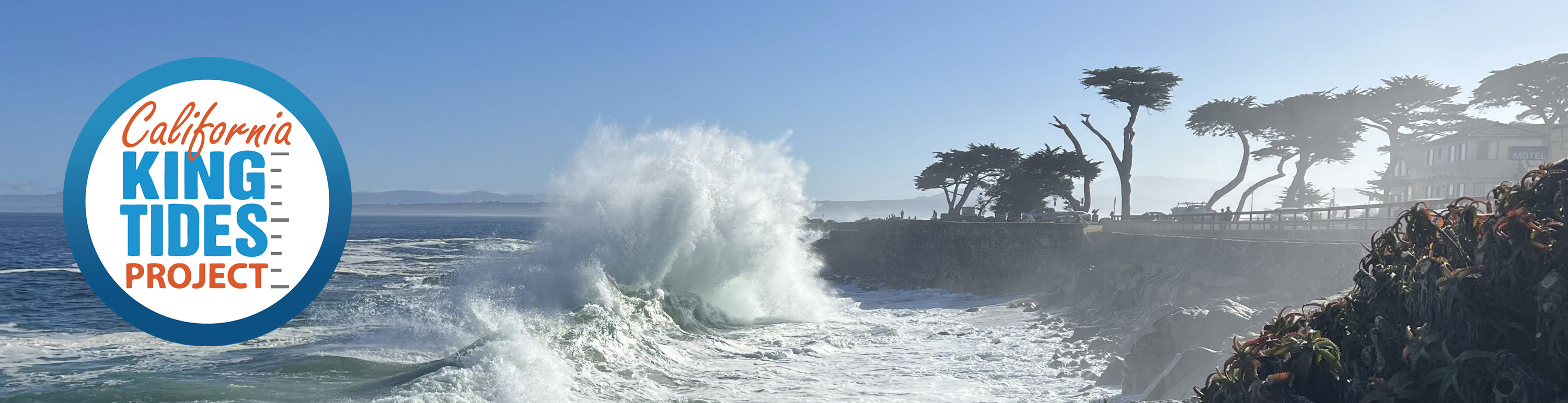
Tips for safely viewing and photographing King Tides
King Tides Home |
How to Participate |
King Tides Photo Gallery |
About King Tides |
Educator Resources
King Tides offer an opportunity to observe a preview of sea-level rise. However,
these exceptionally high tides can create hazardous coastal conditions, especially
when combined with storm surges and large waves, which may be more intense during
El Niño. Keep these safety tips in mind before heading to the coast — no photograph
is worth risking your life.
- Check weather, surf, and tide conditions.
Before heading to the coast check local weather forecasts, surf advisories, and
tide charts to know when tides in your area are rising and receding. Obey cones,
caution tape, and closure signs.
- Plan your route and know your exits.
High tides can completely submerge beaches and coastal access points. Identify
safe routes to and from the shore to prevent getting trapped between advancing
water and steep cliffsides. Be aware of cliffs, bluffs, and other areas that may
become unstable.
- Know your location. Note the name of the
beach, the nearby lifeguard tower numbers, and any posted access signs. In the event
of an emergency call, these could become important details for operators and first
responders.
- Wear appropriate shoes and watch your footing.
Choose closed-toed shoes with good traction and move cautiously on wet or uneven
surfaces. Avoid climbing on unstable logs and rocks, which can become very slippery
when wet.
- Keep a safe distance from the water. Never
turn your back on the ocean and stay a safe distance from the water. Standing on
rocks, seawalls, or bluff edges can be particularly dangerous as powerful waves may
emerge without warning, sweeping unsuspecting adults, children, and pets into the
ocean in an instant.
- Stay alert even at low tide. King Tides
also create extremely low tides, making tide pools and sea caves tempting to explore.
However, conditions can quickly change, “sneaker waves” can surge unexpectedly, and
rising water can trap you in hazardous areas. Check your tide chart and make sure
you’re not in a dangerous area when the tide starts rising.
- Avoid flooded roads. King Tides, especially
when coupled with storm conditions, may submerge roads and parking lots. Avoid driving
through flooded areas as vehicles can quickly become trapped in dangerous conditions.
Saltwater can damage vehicles, including engines and electrical systems. Turn around.
Don’t drown.